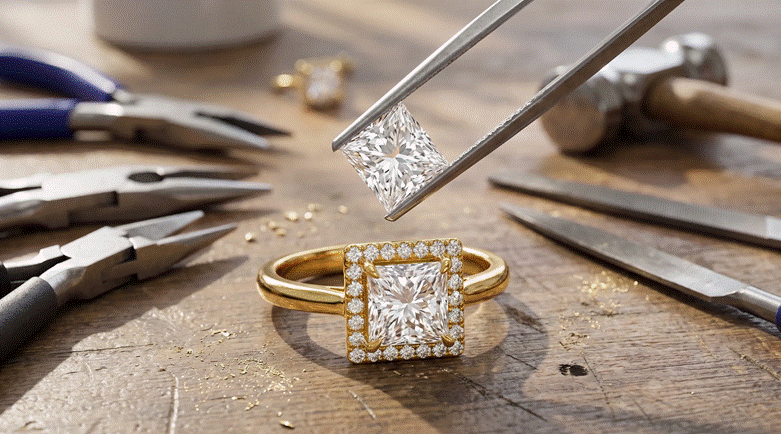
Buying an engagement ring usually starts with the diamond. Its shape, sparkle and size tend to attract the most attention, particularly when couples begin comparing options online. Yet some of the decisions that matter most are less obvious.
For Australians considering lab-grown engagement rings, the choice involves more than finding an attractive stone at the right price. Independent grading, setting design, everyday comfort and the jeweller’s aftercare services can all influence how satisfied someone feels with their purchase years later.
There is also an important change in diamond grading that buyers should understand. Since October 2025, the Gemological Institute of America (GIA) has used a revised assessment system for qualifying laboratory-grown diamonds. That makes it worth looking more closely at the paperwork accompanying a stone rather than relying on familiar grading terms alone.
The Diamond Report Deserves a Closer Look
Laboratory-grown diamonds have essentially the same chemical composition, crystal structure and physical properties as natural diamonds. Their main difference is their origin. Instead of forming deep within the Earth, they are created through controlled technological processes.
The two established production methods are High Pressure High Temperature (HPHT) and Chemical Vapour Deposition (CVD). Both can produce diamonds suitable for engagement rings.
An independent grading report helps buyers understand what they are purchasing. Traditionally, the four Cs have provided the main points of comparison: cut, colour, clarity and carat weight.
However, not every laboratory now presents this information in the same way.
Why GIA and IGI Reports May Look Different
In October 2025, GIA introduced a revised assessment system for qualifying colourless to near-colourless laboratory-grown diamonds. Its current system uses two overall quality classifications, Premium and Standard, rather than the detailed colour and clarity grades used in its earlier reports.
The International Gemological Institute (IGI) continues to issue laboratory-grown diamond grading reports that document individual characteristics using the familiar four Cs.
This distinction matters when comparing diamonds from different sellers. An older GIA grading report, a current GIA quality assessment and an IGI grading report may present information differently.
Before purchasing, check the issuing laboratory, report date, identification number and any information about treatments. Where available, buyers can also compare the report details with the laboratory’s online verification service.
A grading report provides information about a diamond. It does not replace examining the finished ring.
Why a Bigger Diamond Is Not Always the Better Choice
Carat weight often becomes the starting point when couples compare diamonds. It is easy to understand why: a larger stone appears appealing, particularly when laboratory-grown options make different sizes accessible within a chosen budget.
But carat measures weight, not the visible dimensions of a diamond.
Two stones with the same carat weight can look different because of their proportions and shapes. An elongated oval, for example, may appear larger across the finger than a round diamond of similar weight.
Cut quality also deserves attention. A well-proportioned diamond can reflect light more effectively, creating the brightness and sparkle many buyers want.
A larger stone with less attractive proportions may not provide the same visual appeal as a smaller diamond with better light performance.
When comparing options, examine clear photographs and videos under different lighting conditions. If possible, view stones in person rather than relying entirely on enlarged online images.
It is also worth asking whether any visible inclusions affect the stone’s appearance. A clarity grade alone does not tell someone everything about how a diamond looks without magnification.
Ring Settings Matter Long After the Proposal
A beautiful engagement ring should also be comfortable enough for the person who will wear it.
Someone working at a desk may have different practical needs from a person who regularly wears gloves, handles equipment or spends time on physically demanding activities.
The height and structure of the setting can make a noticeable difference.
A high-set solitaire often creates a striking appearance, although a raised stone may catch more easily on clothing. A lower-profile design can feel less intrusive during ordinary activities.
Bezel settings surround the stone with a metal rim, offering protection around its edge. Traditional claw settings expose more of the diamond but require attention to the condition and security of the claws.
Neither style is automatically right for everyone.
Metal Choice Is More Than a Colour Preference
Yellow gold, white gold, rose gold and platinum each create a different appearance. Their maintenance requirements and suitability for daily wear also deserve consideration.
White gold jewellery may have a rhodium-plated finish that needs renewing over time, depending on wear. Platinum can develop a surface patina, while gold alloys vary in hardness according to their composition.
The width and thickness of the band also influence comfort and durability.
Very delicate bands can look attractive, but they may not suit someone who expects to wear the same ring every day for decades.
An experienced jeweller should be able to explain the trade-offs between appearance, construction and maintenance without pushing buyers towards the most expensive design.
The Total Ring Price Matters More Than the Stone Price
Comparing advertised diamond prices can be misleading when different retailers include different services or components.
A loose diamond price does not necessarily include the setting, manufacturing, resizing or other costs associated with the finished ring.
When browsing lab diamond engagement rings, it is useful to compare complete designs rather than focusing only on the centre stone. The finished ring’s proportions, band design and setting can be just as important as its diamond specifications.
Buyers should request a written quotation showing exactly what is included.
For Australian purchases, confirm whether the displayed amount includes GST, whether delivery is insured and whether alterations or custom design work attract additional charges.
It is also sensible to leave room in the budget for future maintenance. Professional cleaning, checking the claws and occasional adjustments may become necessary with regular wear.
Rather than following a traditional rule about spending a certain number of months’ salary, couples can choose an amount that suits their actual financial circumstances.
Consider the Occasion and the Person Wearing the Ring
Engagement rings have a special place in jewellery buying, but the principles behind selecting a diamond apply to other meaningful purchases.
A published feature about lab diamonds examines how different diamond styles and settings suit engagements, anniversaries and everyday jewellery. Its broader message is relevant when choosing an engagement ring: the purpose of a piece and the wearer’s preferences should shape the design.
Some people prefer a traditional round solitaire. Others are drawn to oval, emerald-cut or pear-shaped stones, or rings featuring smaller diamonds around the centre.
Personal style matters more than following whichever design happens to be fashionable.
It is also worth checking whether the chosen engagement ring will sit comfortably beside a future wedding band. Some raised or unusually shaped settings leave gaps that require a specially designed matching band.
Considering both rings together may prevent an unexpected design problem later.
Environmental Claims Need More Than a Label
Laboratory-grown diamonds are sometimes marketed using terms such as sustainable, environmentally friendly or ethical.
Their production avoids the extraction involved in diamond mining, but manufacturing diamonds still requires energy, equipment and other resources.
The environmental impact can depend on factors such as the production method, electricity source and manufacturing processes.
Australia’s competition regulator, the ACCC, advises businesses to avoid broad environmental claims that cannot be properly supported.
Consumers should apply the same care when evaluating jewellery advertising.
If a retailer makes a claim about renewable energy, reduced emissions or responsible manufacturing, ask what evidence supports that statement and exactly which stages of production it covers.
A specific, verifiable explanation is more useful than an appealing label.
Australian Consumer Rights Should Be Part of the Decision
The excitement of designing a ring can make delivery terms and return policies seem like minor details. They become much more important if the ring arrives with a problem.
Under Australian Consumer Law, goods purchased from businesses are generally covered by consumer guarantees, including requirements relating to acceptable quality and matching their descriptions.
These rights exist independently of a retailer’s voluntary warranty.
However, a change of mind does not automatically create a legal entitlement to a refund. A jeweller may offer additional returns or exchange options under its own policy, so those conditions should be checked before ordering.
Custom-made and personalised rings deserve particular attention. Ask what happens if the size is incorrect, the design needs altering or the finished piece does not match the agreed specifications.
It is worth keeping copies of the original quotation, design drawings, grading report and written correspondence.
Buyers should also confirm how warranty claims, routine servicing and repairs are handled, especially when purchasing online or from a business located overseas.
A Few Questions Can Prevent Last-Minute Regrets
Before paying a deposit, buyers should feel comfortable asking the jeweller to explain the purchase clearly.
Useful questions include:
- Which independent laboratory assessed the diamond?
- Can the grading report be verified?
- Is the quoted amount the complete price of the finished ring?
- What resizing or adjustment services are available?
- Will the setting accommodate a wedding band?
- What happens if the ring arrives damaged or differs from the order?
- Is insured delivery included, and what is the expected completion date?
These questions are especially useful for custom engagement rings, where the final piece may not exist when the order is placed.
There is no single diamond size, setting style or metal that works for every Australian couple. A ring that suits one person’s taste and daily routine may not suit another.
Taking the time to examine the diamond, understand the paperwork and discuss practical details with the jeweller can make the purchase feel less uncertain. The aim is not simply to choose a ring that photographs beautifully on the day of the proposal, but one that continues to feel right through ordinary life.


